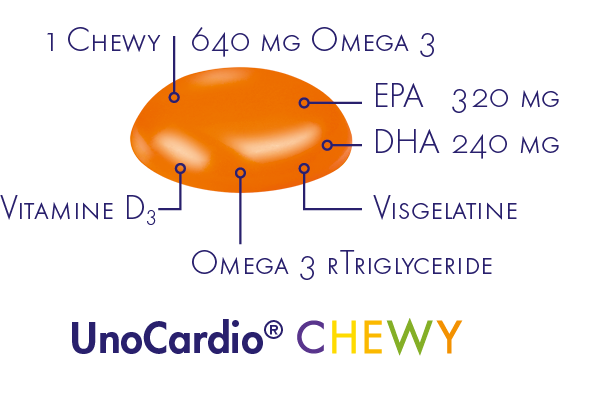
Recommended for adults and children between 2 and 18 years
The Health Council recommends a minimum daily intake of 250 mg omega-3 fatty acids EPA and DHA for adults and children between the ages of 2 and 18.
That is around 1750 mg per week and corresponds approximately to 1 portion of oily fish per week.
Specific health claims relevant to adults
Immune system and resistance
Vitamin D contributes to the normal functioning of the immune system and ensures good resistance
Cell division
Vitamin D is involved in the cell division process and contributes to the production of cells and tissues
Cardiovascular diseases
By far the most research has taken place in the field of heart and blood vessels. The claims below have been approved:
Good for the heart:
Daily intake of 250 mg EPA and DHA has a beneficial effect on the heart and contributes to the normal functioning of the heart
Healthy fat or triglyceride levels in the blood:
Daily intake of at least 2000 mg EPA & DHA contributes to the maintenance of normal and healthy fat levels in the blood
Calcium content
Vitamin D contributes to normal calcium levels in the blood
Healthy blood pressure:
Daily intake of at least 3000 mg EPA & DHA contributes to the maintenance of normal and good blood pressure.
Brain
A large part of our brain consists of fats and no less than 30% of them are omega-3 fatty acids. The following health claims are permitted:
DHA is an important building block of the brain.
Daily intake of 250 mg DHA contributes to the maintenance of normal brain function.
Eyes
Our eyes also contain a very high concentration of omega-3. The following health claims are permitted:
DHA plays a role in the functioning of the retina, is good for vision and helps to see normally.
Daily intake of 250 mg DHA contributes to the maintenance of normal eye function.
Bones and teeth
Vitamin D increases the absorption of calcium in the bones and is good for maintaining strong bones
Vitamin D is important for building and maintaining strong teeth
Muscles
Vitamin D is good for the muscles and is important for maintaining normal muscle function
Vitamin D helps to reduce the risks of falls related to postural instability and muscle weakness. Falling is a risk factor for bone fractures in men and women aged 60 and over.
The latter claim only applies to a minimum of 600 IU per dose and a daily intake of at least 800 IU from all sources.
Health claims relevant to fetus, infant and child
Brain of fetus and infant
Daily intake of 200 mg DHA in addition to the 250 mg EPA & DHA recommended by the Health Council for adults contributes to the normal development of the brain and brain function in the fetus and breastfed infants.
Eyes of fetus and infant
Daily intake of 200 mg DHA in addition to the 250 mg EPA & DHA recommended by the Health Council for adults contributes to the normal development of the eyes and vision in the fetus and in breastfed infants.
Immune system and resistance of children
Vitamin D contributes to the normal functioning of the immune system and ensures good resistance
Bone structure of children
Vitamin D is necessary for normal growth and development of the bones of children
Limits
Important to know and adhere to:
The daily intake of omega-3 fatty acids EPA and DHA via supplements should under no circumstances exceed 5000 mg


 Op werkdagen voor 21.00 besteld, morgen in huis
 Gratis thuisbezorgd vanaf € 90,-